
Large Wood Kitchen with Double Island in Long Island, NY [Cabinetry $41K–$46K]
What does a large double-island family kitchen in Long Island actually cost? Explore a real project featuring hidden storage, Sub-Zero refrigeration, and the design decisions that shaped the final investment.

Explore a real Long Island kitchen renovation with cabinetry costs of $41K–$46K and a total kitchen package of approximately $81K. Learn how layout planning, storage decisions, appliance selections, and material choices shaped the final investment.
A Kitchen Designed Around the Reality of Family Life
Many families dream about having a large kitchen, only to discover that bigger doesn't automatically mean better. Long walking distances, crowded work zones, and family traffic cutting through the cooking area can quickly turn a beautiful kitchen into a frustrating one.
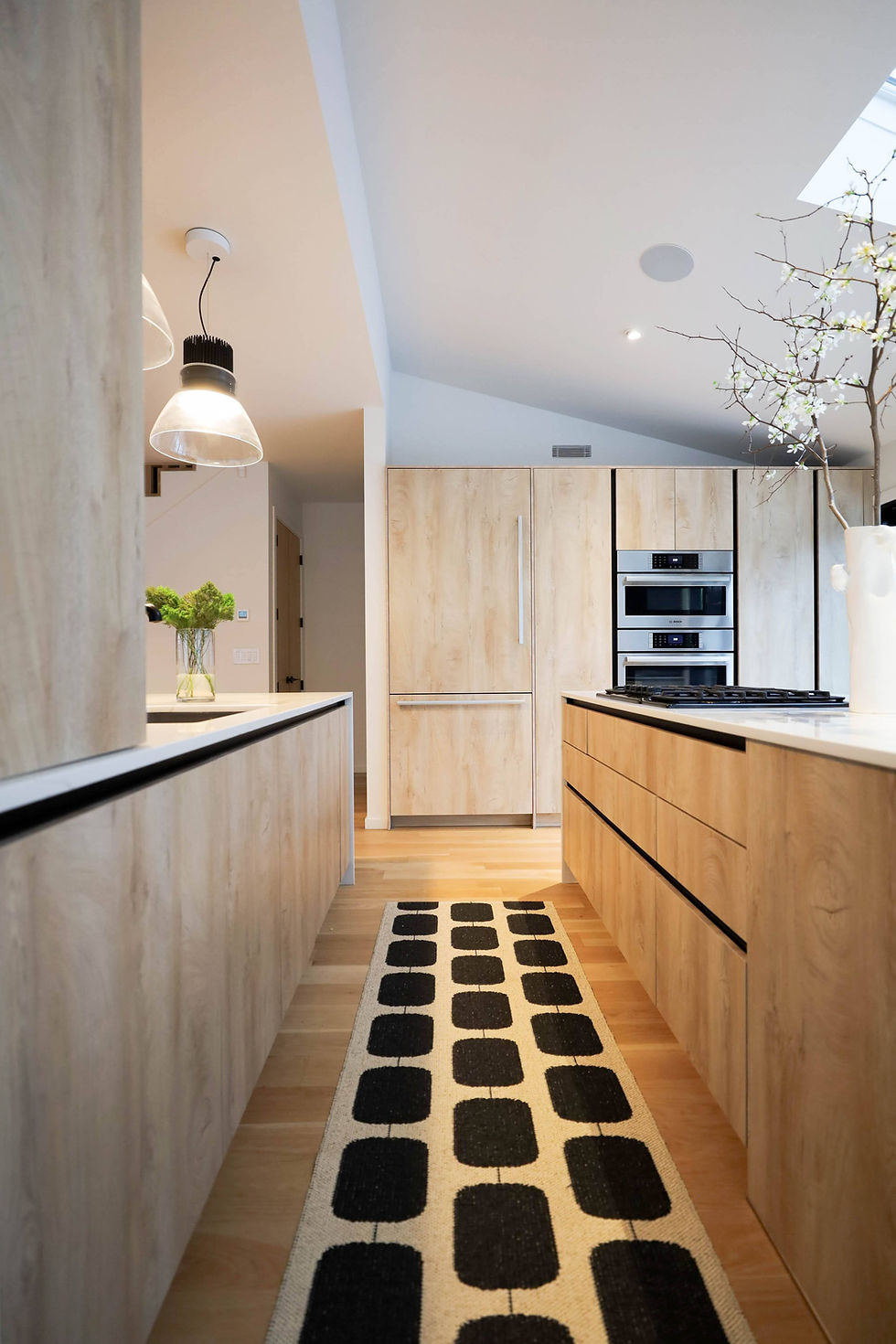
This Long Island kitchen was designed for a busy family that wanted a space capable of supporting both everyday routines and frequent entertaining. The room's unique architecture created an opportunity to organize the kitchen around two island and peninsula zones that become the center of activity. By concentrating the primary cooking, preparation, and storage functions into a compact working area, the design creates an efficient workspace while allowing family members and guests to circulate throughout the room without creating bottlenecks around the main work zone.
The result is a kitchen that feels spacious and social without sacrificing functionality.
Warm Materials That Balance Style, Durability & Budget
Material selection played an important role in both the appearance and practicality of this kitchen. The handleless cabinetry creates a clean and contemporary aesthetic, while the warm wood replica fronts prevent the space from feeling overly minimal or sterile.
Beyond appearance, the material selection was also a practical decision. Laminate wood replica finishes are generally easier to maintain than many premium lacquer or veneer alternatives while also helping control costs. For a busy family kitchen, the combination of durability, ease of cleaning, and visual warmth creates a balance between aesthetics and everyday usability.
Functional Storage Designed to Hide Everyday Life
One of the most distinctive aspects of this kitchen is the extensive use of specialized storage solutions designed to keep the space organized and visually uncluttered. Larder units positioned near the islands create dedicated zones for countertop appliances, breakfast items, and daily essentials. The unit located near the seating area functions almost like a hidden breakfast station, allowing items such as toasters and other small appliances to remain easily accessible without permanently occupying valuable countertop space.
The pantry area further expands the kitchen's organizational capabilities through internal pull-outs and specialized storage systems. While these accessories increase costs compared to traditional shelving, they significantly improve accessibility and make it easier to keep large pantry cabinets organized. Rather than reaching deep into cabinets or losing items at the back of shelves, homeowners gain easier access to stored goods and a more functional storage experience.
For families who rely heavily on kitchen storage, these solutions often improve daily usability enough to justify the additional investment.
Architectural Challenges & the Downdraft Solution
The unique sloped ceiling and skylight condition influenced several important design decisions throughout the project. A traditional ceiling-mounted hood would have introduced a large visual element into the center of the room and competed with the architecture of the space. Instead, a downdraft ventilation system was selected to preserve the open feeling of the kitchen while maintaining clean sightlines throughout the room.
However, downdraft ventilation requires careful planning. The ventilation path must be evaluated early in the design process to determine whether air can be routed downward and exhausted outside the home or whether a recirculating solution is required. This decision influences cabinetry, storage capacity, installation requirements, and overall performance, making it an important consideration rather than a simple appliance selection.
A Smart Cost-Saving Design Decision
One of the smartest cost-control decisions in this project was intentionally keeping the tall cabinet section at a standard height. Because of the sloped ceiling condition, the cabinetry could have been extended upward and customized to follow the ceiling line. While this would have increased storage capacity, it would also have required significant customization, additional materials, and increased installation complexity.
By stopping the cabinetry at a standard height, the design maintains a clean architectural appearance while avoiding a costly custom condition that would have delivered relatively little additional storage value. It is a good example of how thoughtful planning is often about knowing where additional spending stops creating meaningful returns.
Kitchen Cost BreakdownThe following kitchen renovation cost breakdown reflects the exact kitchen configuration shown in this Long Island kitchen display. Semi-Custom German Cabinetry, Entry-Level Materials: $41,000–$46,000 Appliances: $22,321 Countertops: $16,500 Fixtures: $1,598 Estimated Total Kitchen Package As Displayed:Approximately $81,419Construction Costs: Typically, 40–60% of the total renovation cost and not included in total costs) These costs reflect the kitchen as displayed and are provided for general guidance. Final pricing will vary based on layout, selections, and project conditions. For full specifications and detailed breakdown, view the complete kitchen display. See the Exact Kitchen Configuration Behind These CostsThis article explains the planning strategy behind this kitchen. The full kitchen display shows the exact cabinetry, appliances, materials, and configuration used for this project. If this kitchen feels close to what you are considering, you can also request a tailored quote for your own space directly from the kitchen display page. Explore more kitchens, cost ranges |
What Increased the Cost in This Kitchen
Several design decisions significantly increased the investment level of this kitchen:
Double island / peninsula configuration
Large quantity of cabinetry
Sub-Zero integrated refrigeration
Downdraft ventilation system
Additional ventilation components and blower
Hidden breakfast station storage
Larder storage units
Internal pantry pull-outs
Pull-out larder storage system
Extensive pantry organization
Large quartz countertop surfaces
Beverage center
While this kitchen is built on an entry-level material package within a semi-custom German cabinetry system, the overall scale of the project increases the investment considerably. The double island configuration requires substantially more cabinetry and countertop material than a traditional kitchen layout. Specialized storage solutions such as the larder units, pantry pull-outs, and hidden breakfast station add convenience and organization but also increase hardware and manufacturing costs. The integrated Sub-Zero refrigeration package and downdraft ventilation system further elevate the investment level, particularly because the downdraft solution requires additional planning, ventilation components, and coordination. Together, these decisions create a highly functional family kitchen designed around entertaining, organization, and daily usability.
What Could Reduce the Cost
Although this kitchen intentionally prioritizes storage, entertaining, and family functionality, several modifications could reduce costs substantially:
Replace larder units with standard pantry cabinets
Eliminate the pull-out larder storage system
Use shelves instead of specialized pantry pull-outs
Combine pantry storage into fewer cabinet units
Reduce specialty storage hardware
Select a more moderate appliance package
Simplify the ventilation strategy where feasible
The greatest savings opportunities would come from simplifying the specialized storage components. While larder units and pull-out storage systems provide excellent accessibility and organization, they add premium hardware, additional manufacturing complexity, and installation costs. Combining the pantry storage and pull-out larder into a single larger pantry cabinet with internal pull-outs can often deliver similar functionality at a lower investment level. Appliance selections can also significantly influence the overall budget, particularly refrigeration systems. Importantly, many of these adjustments would have only a limited impact on the overall appearance of the kitchen while creating meaningful cost savings.
Understanding This Kitchenin Relation to Your Own ProjectIf you are considering a similar kitchen, the most important step is understanding how these design decisions translate into your own space. Even kitchens with a similar appearance can vary dramatically in investment depending on:
This example shows how a kitchen can remain relatively practical in material selection while still reaching a higher investment level because of size, layout complexity, appliances, and storage planning. Curious What a Kitchen Like This Would Cost in Your Home?Explore the complete kitchen display, review the exact specifications, and request tailored cost insight based on your layout, storage needs, appliance preferences, and renovation goals. Wondering How Your Kitchen Compares?Explore other real NYC kitchens with different layouts, appliance packages, material selections, and investment levels to see what aligns with your space, goals, and budget. → Explore the Kitchen Discovery Room |
How This Kitchen Compares
This kitchen is built on a semi-custom German kitchen platform with entry-level materials. It demonstrates how layout and storage decisions often influence investment just as much as material selections. Compared to luxury European kitchen brands, the cabinetry material selection helps keep the investment more controlled. However, this kitchen also demonstrates that material level alone does not determine final cost. The size of the kitchen, number of cabinetry elements, hidden storage features, appliance selections, countertop quantity, and ventilation strategy all influence the final investment.
In this case, the warm wood replica laminate keeps the kitchen practical and easier to maintain, while the double island layout, larder units, Sub-Zero refrigeration, downdraft system, and extensive storage planning push the overall package into a more substantial investment category.
NY Planning Reality: Are Downdraft Systems Worth It?
Downdraft systems can be a smart solution when the architecture makes a traditional hood difficult or visually disruptive. In this kitchen, the sloped ceiling and skylight make a ceiling-mounted hood less ideal. The downdraft system helps preserve the open architectural feeling of the space.
But the planning must happen early. Downdraft ventilation affects cabinet space, duct routing, appliance placement, and installation coordination. Before choosing this solution, the design team needs to understand where the air can go and whether the system can vent outside or needs to recirculate. Like many kitchen decisions, the best solution depends on balancing architecture, function, storage, budget, and long-term performance.
Explore Similar NYC Kitchens & Find What Fits Your Budget & Design Vision
If this kitchen is close to what you are considering, take the opportunity to explore other real NYC kitchens to find a direction that aligns with your space, budget, and design goals.
Kitchens that look similar can vary significantly in cost depending on how they are specified. Reviewing different layouts, cabinetry approaches, and appliance configurations helps you see how these decisions shape both the outcome and the investment.
Inside the Kitchen Discovery Room, you can explore real NYC kitchen setups with full cost breakdowns, allowing you to identify which combinations of layout, materials, and appliances match what you are looking for.
Once you find a direction that fits, you can request a tailored quote based on your layout and preferences.
What to Do Next
If this kitchen gives you a sense of what a project like this can cost, the next step is understanding how these decisions translate to your own space. From here, you can continue in different ways:
Explore more kitchens, cost ranges
Inside the Kitchen Discovery Room, you can explore different layouts, cabinet systems, and appliance setups with real cost ranges to understand what aligns with your space and budget.
Define a layout for your own apartment
Create a clear plan before engaging showrooms or contractors
Coordinate the kitchen scope from the start
Align layout, appliances, and execution to avoid fragmented decisions
Each path supports a different level of involvement.

Author & Designer (Written by Sabrina Antony, founder and lead designer of Kitchen Design NYC & Atelier bauherr.)
Sabrina Antony is an independent kitchen designer based in New York City, specializing in residential kitchen spaces for custom homes and high-end renovations throughout Manhattan, the Hamptons, and Greenwich. Her expertise includes custom kitchen millwork, European kitchen systems, kitchen planning, material direction, technical coordination, and renovation clarity. With nearly 20 years of international design experience, Sabrina creates kitchens that feel personal, highly functional, and architecturally connected to the home.
Each project begins with understanding how people truly live. From early design direction to construction coordination, Sabrina guides homeowners, architects, designers, and contractors through the decisions that shape the kitchen’s function, cost, atmosphere, and long-term outcome.
Her goal is always the same: to help clients make clearer decisions, protect their investment, and create kitchens that feel personal, functional, and lasting.


