
Luxury Hamptons Estate Kitchen ($176K–$191K) | Cost Drivers & Design Decisions
How This Luxury Hamptons Kitchen Reached $176K–$191K. Creating a Luxury Hamptons Kitchen Through Specification, Not Excess.
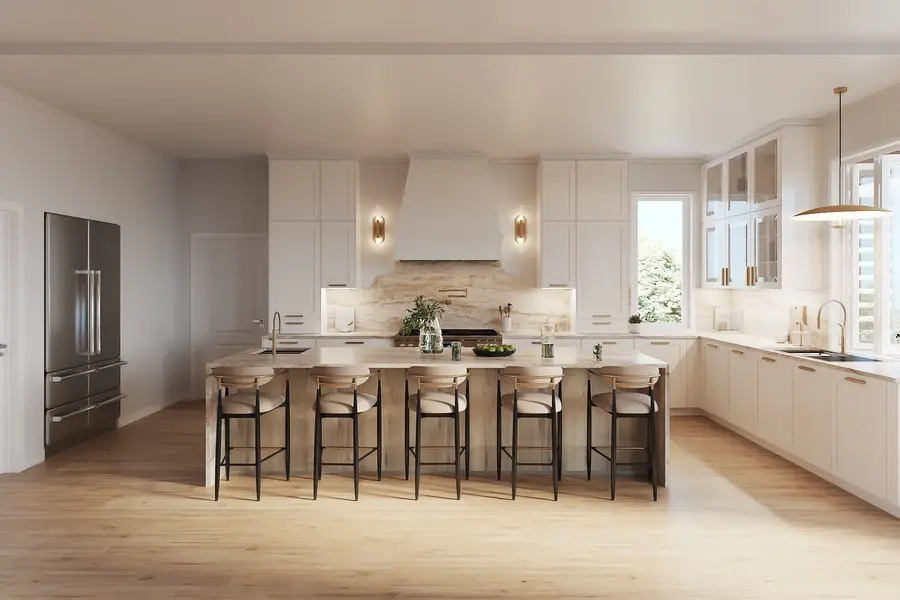
Explore this Hamptons-inspired estate kitchen featuring painted shaker cabinetry, premium German cabinet engineering, luxury Wolf and Thermador appliances, Taj Mahal quartzite, and cabinetry costs of approximately $90K–$105K. Learn how cabinetry choices, stone detailing, and design priorities shaped the final investment.

A Luxury Kitchen Built Around Appearance, Functionality, and Long-Term Value
When homeowners envision a luxury Hamptons kitchen, they often picture custom millwork, handcrafted details, and cabinetry built specifically for the home. Large painted cabinet runs, statement islands, and elegant stonework have long been associated with traditional estate kitchens throughout the Hamptons, Long Island, and Connecticut.
For this project, the homeowners wanted that same sense of quality and permanence, but they also wanted the storage functionality, engineering, and consistency offered by a premium German cabinet system. The goal was to create a kitchen that felt timeless and established while still performing like a modern kitchen behind the scenes.
The Design Strategy Behind This Kitchen
Once the overall direction was established, the question became where to invest. The homeowners were not interested in spending money equally across every aspect of the project. Instead, the investment was concentrated in the areas that would have the greatest impact on how the kitchen looked, felt, and functioned every day.
That meant prioritizing cabinetry, storage, and stonework over highly customized construction. The kitchen uses a premium German cabinet system, but it does so at a scale rarely seen in a typical home. Approximately forty linear feet of cabinetry, extensive storage, stacked upper cabinets, and a large island create the foundation of the design. The objective was to create a kitchen with the visual presence expected in a luxury home while maintaining the functionality required for everyday family life.
Where the Investment Shows
One of the reasons this kitchen feels so refined is that the investment was directed toward a few carefully chosen elements rather than being spread across excessive decoration. The cabinetry is a good example. Traditional shaker kitchens are typically more expensive than modern flat-panel kitchens because painted and lacquered finishes require a greater level of manufacturing and finishing. Costs can increase even further when decorative elements such as furniture legs, applied moldings, elaborate crown details, and highly ornamental end panels are introduced.
In this kitchen, a different approach was taken. Rather than layering on decorative features, the design focuses on a cleaner and more contemporary interpretation of the traditional shaker kitchen. The painted shaker doors provide the warmth and character associated with classic Hamptons homes, while the restrained detailing keeps the overall appearance calm, balanced, and sophisticated. The result is a kitchen that feels luxurious without feeling overly formal or heavily decorated.
The stonework follows a similar philosophy. Instead of introducing multiple statement features throughout the room, the design focuses on a few carefully executed details. The waterfall island creates a strong focal point at the center of the kitchen, while the curved quartzite detailing surrounding the hood and backsplash area introduces a softer architectural element that immediately draws attention.
Neither feature dominates the room on its own. Together, however, they elevate the entire kitchen. These are the types of details that people may not immediately identify when they walk into the space, yet they are often what makes a kitchen feel more luxurious, more custom, and more memorable than a simpler installation.
Kitchen Cost BreakdownThe following kitchen renovation cost breakdown reflects the exact kitchen configuration shown in this Hamptons residence: Semi-Custom German Cabinetry: $90,000–$105,000 Premium Appliance Package: Approximately $46,800 Taj Mahal Quartzite Countertops & Backsplash: Approximately $34,900 Fixtures: Approximately $4,500 Estimated Total Kitchen Package (As Displayed)$176,000–$191,000 Construction Costs: Typically, 40–60% of the total renovation cost and not included in total costs) These costs reflect the kitchen as displayed and are provided for general guidance. Final pricing will vary based on layout, selections, and project conditions. For full specifications and detailed breakdown, view the complete kitchen display. See the Exact Kitchen Configuration Behind These CostsThis article explains the planning strategy behind this kitchen. The full kitchen display shows the exact cabinetry, appliances, materials, and configuration used for this project. If this kitchen feels close to what you are considering, you can also request a tailored quote for your own space directly from the kitchen display page. Explore more kitchens, cost ranges |
What are the cost drivers for this kitchen?
The primary cost drivers in this kitchen included:
Approximately 40 linear feet of cabinetry
Painted shaker cabinetry throughout
Stacked upper cabinetry
Extensive drawer and pull-out storage
Large statement island
Taj Mahal quartzite countertops and backsplash
Waterfall island detailing
Curved quartzite feature surrounding the cooking area
Premium Wolf, Cove, and Thermador appliance package
The largest contributor to the investment is the cabinetry itself. Traditional shaker kitchens are often more expensive than homeowners expect because painted and lacquered finishes typically cost more than contemporary flat-panel laminate cabinetry. The extensive cabinet quantity, stacked upper cabinets, large island, and storage upgrades further increase the investment while helping create the scale and presence expected in a luxury Hamptons kitchen.
The stonework represents the second major cost driver. Taj Mahal quartzite is a premium material, but much of the investment comes from the fabrication itself. The waterfall island and curved quartzite detailing surrounding the cooking area require significantly more labor than standard countertop installations and contribute substantially to the finished appearance of the kitchen.
The premium appliance package also adds meaningfully to the overall investment, with Wolf, Cove, and Thermador selections placing the kitchen firmly within the luxury appliance category.
What Could Reduce Costs
The largest opportunities for savings would include:
Reducing overall cabinet quantity
Eliminating stacked upper cabinetry
Simplifying storage accessories and pull-outs
Switching from painted shaker doors to slab-door cabinetry
Selecting laminate finishes instead of lacquer finishes
Replacing Taj Mahal quartzite with quartz
Eliminating waterfall island panels
Simplifying the curved stone detailing surrounding the cooking area
Selecting a more moderate appliance package
The greatest savings would likely come from the cabinetry. Reducing cabinet quantity, simplifying storage features, or moving to a contemporary slab-door design would significantly reduce costs while maintaining a similar overall layout.
The stonework offers another major opportunity. While Taj Mahal quartzite contributes greatly to the character of the kitchen, replacing it with quartz and simplifying the fabrication details would lower both material and labor costs.
Appliances represent the final major variable. Moving from Wolf, Cove, and Thermador to brands positioned lower in the market would reduce costs substantially without changing the overall design of the kitchen.
Understanding This Kitchen in Relation to Your Own ProjectIf you are considering a similar kitchen, several factors can significantly influence final pricing:
Even kitchens that appear very similar can vary substantially in cost depending on how these decisions are specified. Curious What a Kitchen Like This Would Cost in Your Home?Explore the complete kitchen display, review the exact specifications, and request tailored cost insight based on your layout, storage needs, appliance preferences, and renovation goals. Wondering How Your Kitchen Compares?Explore other real NYC kitchens with different layouts, appliance packages, material selections, and investment levels to see what aligns with your space, goals, and budget. → Explore the Kitchen Discovery Room |
How This Kitchen Compares
One of the more interesting aspects of this kitchen is that it feels considerably more luxurious than many kitchens built at a similar investment level, yet it relies on relatively restrained detailing.
Many traditional luxury kitchens achieve their appearance through extensive moldings, decorative furniture elements, ornate range surrounds, and highly customized millwork details. This kitchen takes a different approach. The cabinetry remains relatively clean and understated, allowing the overall scale of the room, the painted shaker finish, and the material selections to do most of the work.
The result is a kitchen that feels substantial without feeling heavy. The large cabinet runs create presence. The stacked cabinetry adds height and proportion. The stonework introduces focal points without overwhelming the room. Together, these decisions create a quieter interpretation of luxury that feels timeless rather than highly decorative.
This approach also helps explain why two kitchens with similar budgets can look completely different. One homeowner may invest heavily in decorative detailing and custom construction. Another may direct the same investment toward cabinetry quantity, premium finishes, storage functionality, and architectural stonework. Both kitchens may occupy a similar price range while delivering very different experiences.
NYC Reality: Not All Luxury Kitchens Are Built the Same Way
One of the reasons homeowners struggle to compare kitchen proposals is that two kitchens can arrive at a similar investment level for completely different reasons. One project may achieve its luxury appearance through extensive custom millwork, decorative moldings, handcrafted details, and highly customized construction. Another may focus on cabinetry quantity, premium finishes, natural stone, storage functionality, and overall composition.
This kitchen falls into the second category. The investment was not directed toward elaborate ornamentation or highly decorative millwork details. Instead, the focus was placed on creating a kitchen with strong visual presence, high-quality finishes, substantial storage, and carefully selected focal points. The painted shaker cabinetry provides the traditional character associated with Hamptons homes, while the scale of the cabinetry and island help the room feel appropriately sized for the home. The Taj Mahal quartzite and curved stone detailing introduce moments of luxury without overwhelming the overall design.
For homeowners planning their own renovation, this is an important distinction. Luxury kitchens are often discussed in terms of brand names, custom cabinetry, or individual products. In practice, the finished result is usually shaped by a much larger collection of decisions. The way the cabinetry is specified, the amount of storage included, the quality of the finishes, and the level of detailing throughout the room often have as much influence on the final outcome as any individual brand selection.
This is why kitchens with similar budgets can look and feel completely different. The total investment tells only part of the story. Understanding where the money is being allocated often provides a much clearer picture of the kitchen you will ultimately receive.
Explore Similar NYC Kitchens & Find What Fits Your Budget & Design Vision
If this kitchen is close to what you are considering, take the opportunity to explore other real NYC kitchens to find a direction that aligns with your space, budget, and design goals.
Kitchens that look similar can vary significantly in cost depending on how they are specified. Reviewing different layouts, cabinetry approaches, and appliance configurations helps you see how these decisions shape both the outcome and the investment.
Inside the Kitchen Discovery Room, you can explore real NYC kitchen setups with full cost breakdowns, allowing you to identify which combinations of layout, materials, and appliances match what you are looking for.
Once you find a direction that fits, you can request a tailored quote based on your layout and preferences.
What to Do Next
If this kitchen gives you a sense of what a project like this can cost, the next step is understanding how these decisions translate to your own space. From here, you can continue in different ways:
Explore more kitchens, cost ranges
Inside the Kitchen Discovery Room, you can explore different layouts, cabinet systems, and appliance setups with real cost ranges to understand what aligns with your space and budget.
Define a layout for your own apartment
Create a clear plan before engaging showrooms or contractors
Coordinate the kitchen scope from the start
Align layout, appliances, and execution to avoid fragmented decisions
Each path supports a different level of involvement.

Author & Designer (Written by Sabrina Antony, founder and lead designer of Kitchen Design NYC & Atelier bauherr.)
Sabrina Antony is an independent kitchen designer based in New York City, specializing in residential kitchen spaces for custom homes and high-end renovations throughout Manhattan, the Hamptons, and Greenwich. Her expertise includes custom kitchen millwork, European kitchen systems, kitchen planning, material direction, technical coordination, and renovation clarity. With nearly 20 years of international design experience, Sabrina creates kitchens that feel personal, highly functional, and architecturally connected to the home.
Each project begins with understanding how people truly live. From early design direction to construction coordination, Sabrina guides homeowners, architects, designers, and contractors through the decisions that shape the kitchen’s function, cost, atmosphere, and long-term outcome.
Her goal is always the same: to help clients make clearer decisions, protect their investment, and create kitchens that feel personal, functional, and lasting.


