
Large White German Kitchen with Island in Chelsea, NYC ($39.5K–$44.5K Cabinetry)
What does it actually cost to create a large family kitchen with extensive storage, generous countertop space, and a clean European aesthetic without moving into luxury cabinetry pricing?
A Family Kitchen Designed Around Storage, Symmetry, and Budget-Conscious Planning
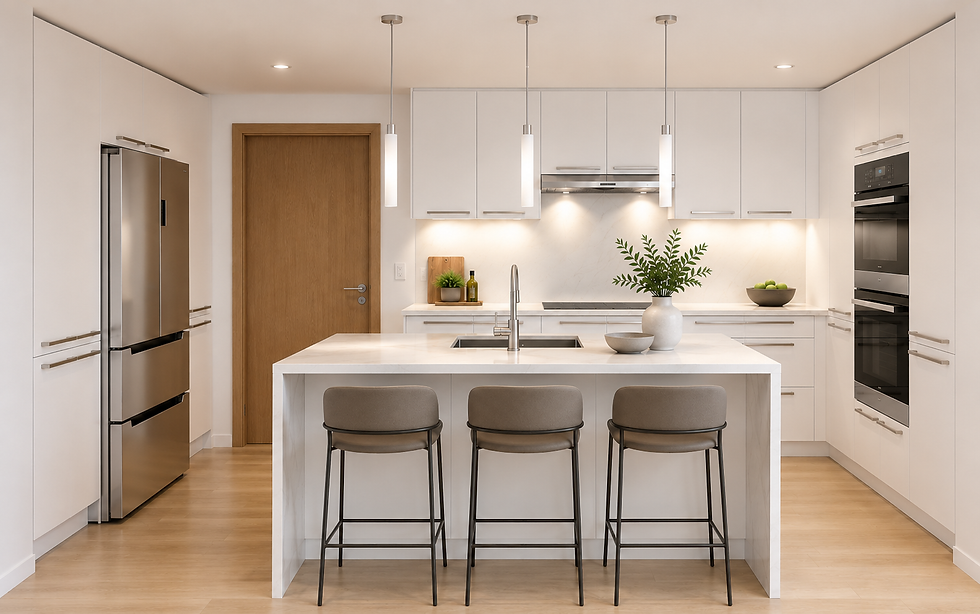
This Chelsea kitchen combines German-made cabinetry, a large island, dedicated pantry storage, double wall ovens, and a carefully balanced layout designed to maximize functionality while maintaining a realistic investment level. Explore how cabinetry costs of approximately $39.5K–$44.5K were shaped not only by the size of the kitchen, but by the planning decisions that helped control costs throughout the project.
A Large Kitchen Built Around Everyday Family Life
Many homeowners assume that creating a large kitchen automatically requires a luxury-level budget. While larger kitchens naturally require more cabinetry and countertop material, the final investment is often influenced far more by how the kitchen is planned than by its size alone. That was the challenge behind this Chelsea project.
The homeowners wanted a kitchen that could comfortably support the realities of family life. Storage was a major priority, but they were equally concerned about maintaining a clean, uncluttered appearance. They wanted generous preparation space, dedicated pantry storage, and enough room for multiple people to use the kitchen comfortably without sacrificing the sleek aesthetic that initially drew them toward German cabinetry.
At the same time, they were conscious of budget. The goal was not to create the most expensive kitchen possible. The goal was to create a kitchen that felt highly organized, visually calm, and substantial without filling every cabinet with costly upgrades and specialty accessories. The result is a kitchen that appears considerably more expensive than its cabinetry investment might initially suggest.
The Design Strategy Behind This Kitchen
One of the most effective ways to control cabinetry costs is not necessarily to reduce storage. Often, it is about simplifying how that storage is achieved. Rather than relying heavily on specialty hardware, corner systems, internal pull-outs, and highly customized storage solutions, this kitchen was planned around straightforward cabinet configurations used as efficiently as possible. The pantry area relies primarily on shelving behind doors rather than expensive pull-out programs. Cabinet widths were stretched wherever practical, reducing the overall number of cabinet boxes, doors, hinges, and hardware components required throughout the kitchen.
The layout itself was also carefully organized around symmetry. The wall oven area creates a balanced focal point. The refrigeration wall follows the same principle. Even the cooking zone and island were designed around centered compositions and equal cabinet proportions wherever possible. This approach creates a visual order that immediately makes the kitchen feel more intentional and more expensive without requiring significant additional investment.
Why This Kitchen Feels More Expensive Than It Is
One of the most overlooked design tools in kitchen planning is symmetry. Many homeowners' associate luxury kitchens with expensive finishes, custom cabinetry, and premium appliances. While those elements certainly contribute, visual balance often has a surprisingly powerful impact on how a kitchen is perceived.
This kitchen uses symmetry throughout the entire design. The tall cabinet walls surrounding the ovens create a strong architectural focal point. The refrigeration area reinforces the same language. The cooktop wall follows a similar approach, creating visual consistency throughout the room. The island becomes the final expression of that strategy. The sink is centered, the cabinetry remains balanced on both sides, and the waterfall detailing frames the entire composition. These decisions create a kitchen that feels calm, intentional, and highly customized even though many of the underlying cabinet choices were made specifically to control costs.
The Cost-Control Decisions Hidden Inside the Design
What makes this project particularly interesting is that several of the most important decisions are almost invisible once the kitchen is complete. One example is the decision to avoid corner cabinetry. Corner cabinets frequently require specialized storage systems that add significant cost while often providing less practical storage than homeowners expect. By organizing the layout around straight cabinet runs, the project avoids both the cost and complexity associated with many corner solutions.
The pantry storage follows a similar philosophy. Instead of investing heavily in elaborate pull-out systems, much of the storage relies on adjustable shelving behind doors. While these solutions may not generate excitement in a showroom, they often provide excellent storage capacity at a fraction of the cost.
Cabinet sizing also played a role. Wider cabinets were used wherever possible, reducing the number of cabinet boxes required throughout the kitchen. Fewer cabinets generally mean fewer doors, fewer hinges, fewer drawer systems, and lower overall cabinetry costs. These decisions rarely stand out visually, yet collectively they can have a substantial impact on the final investment.
Kitchen Cost BreakdownThe following kitchen renovation cost breakdown reflects the exact kitchen configuration shown in this Chelsea home: Semi-Custom German Cabinetry: $39,500–$44,500 Appliances: Approximately $8,000 Quartz Countertops: Approximately $16,800 Fixtures, Accessories & Lighting: Approximately $1,500
Estimated Total Kitchen Package (As Displayed):
$67,000–$72,000
Construction Costs: Typically, 40–60% of the total renovation cost and not included in total costs) These costs reflect the kitchen as displayed and are provided for general guidance. Final pricing will vary based on layout, selections, and project conditions. For full specifications and detailed breakdown, view the complete kitchen display. See the Exact Kitchen Configuration Behind These CostsThis article explains the planning strategy behind this kitchen. The full kitchen display shows the exact cabinetry, appliances, materials, and configuration used for this project. If this kitchen feels close to what you are considering, you can also request a tailored quote for your own space directly from the kitchen display page. Explore more kitchens, cost ranges |
What Drives Costs in This Kitchen
Several design decisions contribute meaningfully to the overall investment level. The first is simply the amount of cabinetry involved. This is a large kitchen with substantial storage capacity, a dedicated pantry wall, and multiple tall cabinet runs. Even cost-conscious cabinetry choices become more expensive when applied across a larger footprint.
The waterfall island also plays a significant role. While visually impactful, waterfall details require additional material, fabrication, transportation, and installation compared to standard countertop applications. The double wall oven configuration further increases costs compared to more conventional cooking arrangements, while the dedicated pantry and refrigeration zone adds both cabinetry and organizational capacity that smaller kitchens simply do not require. Together, these elements create much of the visual presence that defines the kitchen.
What Happens If You Prioritize Cabinet Functionality
This kitchen demonstrates an important tradeoff that many homeowners face. A significant portion of the budget was directed toward storage capacity, countertop workspace, and overall scale rather than advanced cabinet functionality. Homeowners who prioritize organization above all else could certainly introduce pull-out pantries, internal drawers, corner accessories, larder systems, and other specialty storage solutions throughout the design.
The challenge is that many of these upgrades add substantial cost while creating little visible difference once the doors are closed. This is one of the reasons kitchen estimates can vary so dramatically. Two kitchens may look almost identical in renderings while carrying very different cabinetry investments depending on what is happening behind the doors. For many households, selectively upgrading only the highest-use areas often provides the best balance between functionality and budget.
Understanding This Kitchen in Relation to Your Own ProjectIf you are considering a similar kitchen, several factors can significantly influence final pricing:
Even kitchens that appear very similar can vary substantially in cost depending on how these decisions are specified. Curious What a Kitchen Like This Would Cost in Your Home?Explore the complete kitchen display, review the exact specifications, and request tailored cost insight based on your layout, storage needs, appliance preferences, and renovation goals. Wondering How Your Kitchen Compares?Explore other real NYC kitchens with different layouts, appliance packages, material selections, and investment levels to see what aligns with your space, goals, and budget. → Explore the Kitchen Discovery Room |

How This Kitchen Compares
Compared to many contemporary European kitchens of similar size, this project sits in a relatively approachable investment category. The cabinetry utilizes an entry-level German manufacturer combined with cost-conscious material selections. While the overall kitchen feels substantial, the cabinet investment remains in the approximately $40K–$45K range. An almost identical layout from a higher-end German or Italian manufacturer could easily increase cabinetry costs into the $65K–$95K range without materially changing the number of cabinets, the storage capacity, or how the kitchen functions on a daily basis.
This is one of the most misunderstood aspects of kitchen pricing. Homeowners often assume that cabinet brands alone determine cost. In reality, the decisions made within a manufacturer's offering can have just as much impact as the brand itself. A heavily upgraded entry-level kitchen with premium finishes, extensive drawer systems, specialty storage accessories, internal organization programs, and advanced cabinet solutions can quickly approach the investment level of a luxury European kitchen. Conversely, a higher-end manufacturer specified with simpler cabinet configurations, practical storage solutions, and more budget-conscious material selections may end up surprisingly close in price.
The kitchen itself delivers many of the characteristics homeowners typically associate with significantly more expensive projects. The island is generous, the pantry storage is extensive, the tall cabinetry creates a strong architectural presence, and the overall composition feels clean, balanced, and highly intentional. What this project largely avoids are the layers of customization that frequently drive cabinetry costs higher. There are no elaborate corner mechanisms, extensive internal organization systems, premium veneer programs, or heavily customized cabinet constructions hidden behind the doors. Instead, the investment was directed toward creating a large, highly functional family kitchen through thoughtful planning, efficient storage strategies, and disciplined cabinet selections.
NYC Reality: Why Kitchen Quotes Become So Difficult to Compare
This is also what makes comparing kitchen proposals so challenging. An upgraded entry-level kitchen can easily approach the cost of a higher-end German or Italian manufacturer, while a luxury brand specified with simpler cabinetry and more budget-conscious materials may end up surprisingly competitive. As a result, the manufacturer itself rarely tells the whole story. What matters is the combination of cabinetry, materials, storage solutions, appliance integration, and countless other decisions that often remain hidden behind a rendering or floor plan.
The challenge for homeowners is that these differences are not always obvious during the quoting stage. Many proposals are based on preliminary layouts, rough floor plans, or even linear-foot pricing rather than a fully developed kitchen. After visiting several showrooms, it becomes increasingly difficult to remember exactly what was included, what was excluded, and why one proposal costs more than another.
Yet this is often the point where homeowners are asked to choose a manufacturer, select a showroom, and make a commitment. The detailed planning work usually happens afterward, when layouts are refined, storage solutions are finalized, materials are selected, and the true cost implications of those decisions begin to emerge. This is one of the reasons kitchen pricing can feel so confusing. Homeowners are often comparing numbers long before they are comparing the final kitchens that will actually be built.
Explore Similar NYC Kitchens & Find What Fits Your Budget & Design Vision
If this kitchen is close to what you are considering, take the opportunity to explore other real NYC kitchens to find a direction that aligns with your space, budget, and design goals.
Kitchens that look similar can vary significantly in cost depending on how they are specified. Reviewing different layouts, cabinetry approaches, and appliance configurations helps you see how these decisions shape both the outcome and the investment.
Inside the Kitchen Discovery Room, you can explore real NYC kitchen setups with full cost breakdowns, allowing you to identify which combinations of layout, materials, and appliances match what you are looking for.
Once you find a direction that fits, you can request a tailored quote based on your layout and preferences.
What to Do Next
If this kitchen gives you a sense of what a project like this can cost, the next step is understanding how these decisions translate to your own space. From here, you can continue in different ways:
Explore more kitchens, cost ranges
Inside the Kitchen Discovery Room, you can explore different layouts, cabinet systems, and appliance setups with real cost ranges to understand what aligns with your space and budget.
Define a layout for your own apartment
Create a clear plan before engaging showrooms or contractors
Coordinate the kitchen scope from the start
Align layout, appliances, and execution to avoid fragmented decisions
Each path supports a different level of involvement.

Author & Designer (Written by Sabrina Antony, founder and lead designer of Kitchen Design NYC & Atelier bauherr.)
Sabrina Antony is an independent kitchen designer based in New York City, specializing in residential kitchen spaces for custom homes and high-end renovations throughout Manhattan, the Hamptons, and Greenwich. Her expertise includes custom kitchen millwork, European kitchen systems, kitchen planning, material direction, technical coordination, and renovation clarity. With nearly 20 years of international design experience, Sabrina creates kitchens that feel personal, highly functional, and architecturally connected to the home.
Each project begins with understanding how people truly live. From early design direction to construction coordination, Sabrina guides homeowners, architects, designers, and contractors through the decisions that shape the kitchen’s function, cost, atmosphere, and long-term outcome.
Her goal is always the same: to help clients make clearer decisions, protect their investment, and create kitchens that feel personal, functional, and lasting.


