
Small Studio Kitchen with Italian Cabinets & Peninsula in Downtown Manhattan (Cabinetry $30K–$35K)
What does it actually cost to create a small Manhattan kitchen with Italian cabinetry, a compact island, warm wood accents, and an open, airy feel without overwhelming the living space?
Explore this Downtown Manhattan kitchen renovation featuring Italian cabinetry, white lacquer and natural oak finishes, freestanding Bertazzoni appliances, and cabinetry costs of approximately $30K–$35K. Learn how material selections, storage planning, appliance choices, and countertop decisions influenced the final investment.

A Small Kitchen Designed to Feel Open Rather Than Overbuilt
One of the biggest challenges in studio apartments is that the kitchen often occupies a significant portion of the entire living space. Unlike larger homes where the kitchen can exist as its own room, every cabinet, appliance, and countertop surface in a studio becomes part of the overall visual experience of the apartment. That was exactly the challenge in this Downtown Manhattan home.
The homeowners wanted a kitchen with enough storage for everyday living, additional preparation space, and a comfortable place to gather. At the same time, they worried that maximizing storage would make the apartment feel smaller and more crowded. Their goal was not to create the most storage possible. It was to create a kitchen that felt larger than it actually was.
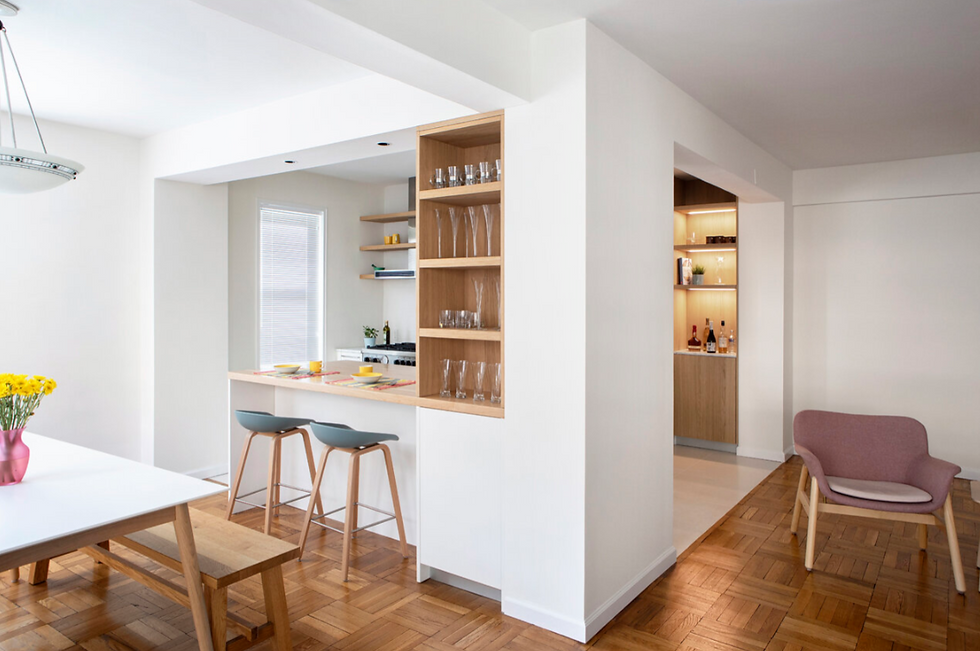
The solution came through a careful balance of white lacquer cabinetry, natural oak accents, open shelving, and a compact island. Rather than filling every available wall with cabinetry, the design focused on maintaining visual openness while still providing the functionality needed for daily life.
The Design Strategy Behind This Kitchen
Many homeowners assume that making a small kitchen feel larger requires sacrificing storage. In reality, the goal is often to reduce the visual weight of the kitchen rather than its functionality. That idea guided many of the decisions in this Downtown Manhattan apartment, where the homeowners wanted the kitchen to feel bright, open, and connected to the rest of the living space without losing the practicality needed for everyday life.
The white lacquer cabinetry helps reflect natural light throughout the apartment and prevents the kitchen from feeling like a large block of storage, while the natural oak accents introduce warmth and texture, creating a softer and more welcoming atmosphere. The island provides additional preparation space, storage, and casual seating while helping define the kitchen within the open-plan layout. Perhaps the most important design decision, however, was what the homeowners chose not to include. Rather than extending cabinetry across every available wall, open shelving was incorporated around the hood to break up what could have become a continuous wall of cabinetry. While enclosed cabinets would have provided additional storage, the shelving creates visual breathing room and reinforces the light, airy feeling the homeowners were hoping to achieve.
The result is a kitchen that feels open and comfortable while still delivering the functionality required for everyday living.
Design and Product Choices That Helped Avoid a Luxury Price Tag
Most people assume that choosing Italian kitchen cabinetry automatically means entering luxury-kitchen territory. While Italian kitchens can certainly become expensive, this project demonstrates that the final investment is often driven more by planning decisions and product selections than by the country of origin alone.
Several key decisions helped keep costs under control while preserving the overall design concept.
One of the most significant was avoiding integrated appliances. The appliance package relies primarily on freestanding Bertazzoni appliances rather than fully paneled alternatives. While integrated appliances can create a highly seamless appearance, they also require additional cabinetry, appliance panels, and installation complexity. By selecting freestanding appliances, the homeowners achieved a cohesive look while avoiding a substantial increase in both appliance and cabinetry costs.
The cabinetry itself was also kept relatively straightforward. The design avoids appliance garages, pocket doors, motorized mechanisms, and many of the specialty storage accessories that can quickly increase costs without dramatically changing how the kitchen functions day to day. Storage planning followed a similar philosophy, relying primarily on conventional cabinetry with standard shelving and hinged doors rather than highly engineered internal systems.
Creating a sophisticated and inviting space often has less to do with adding expensive features and more to do with understanding which features genuinely improve how the kitchen looks, functions, and feels to live with.
The Real Secret Behind Making Small Kitchens Feel Bigger
Many homeowners assume a small kitchen feels larger when storage is reduced. More often, the opposite is true. The goal is not necessarily fewer cabinets, but a kitchen that feels less visually crowded. Open shelving can help create that feeling by breaking up large runs of cabinetry and allowing the room to breathe. However, it only works when it stays relatively organized. Shelves filled with everyday items can quickly make a space feel cluttered, especially in smaller apartments where the kitchen is always visible.
Clean lines, larger cabinet fronts, and a restrained material palette also help. Too many small doors, decorative details, or competing finishes can make a kitchen feel busy regardless of its size. Good lighting is equally important. A combination of room lighting, task lighting, and ambient lighting adds depth and can completely change how spacious a kitchen feels.
Even simple decisions such as carrying the same flooring from the living area into the kitchen can make a noticeable difference. The kitchens that feel the largest are usually not the ones with the least storage. They are the ones where storage, materials, lighting, and layout work together without competing for attention.
Kitchen Cost BreakdownThe following kitchen renovation cost breakdown reflects the exact kitchen configuration shown in this Downtown Manhattan apartment: Semi-Custom Italian Cabinetry (White Lacquer & Natural Oak): $30,000–$35,000 Appliances: $20,000–$21,000 Countertops: $15,500 Fixtures: Approximately $900 Estimated Total Kitchen Package (As Displayed)$66,500–$71,500 Construction Costs: Typically, 40–60% of the total renovation cost and not included in total costs) These costs reflect the kitchen as displayed and are provided for general guidance. Final pricing will vary based on layout, selections, and project conditions. For full specifications and detailed breakdown, view the complete kitchen display. See the Exact Kitchen Configuration Behind These CostsThis article explains the planning strategy behind this kitchen. The full kitchen display shows the exact cabinetry, appliances, materials, and configuration used for this project. If this kitchen feels close to what you are considering, you can also request a tailored quote for your own space directly from the kitchen display page. Explore more kitchens, cost ranges |
What Drives Costs in This Kitchen
Several design decisions increased the investment level of this project:
Italian cabinetry
White lacquer and natural oak material combination
Premium Bertazzoni refrigerator
Quartz and wood countertop combination
The refrigerator represents one of the largest appliance cost drivers in the project. While the remaining appliance package remains relatively restrained, the refrigeration selection sits noticeably above what many homeowners choose for a kitchen of this size.
The material combination also contributes to the investment level. White lacquer paired with real wood accents creates a more luxurious appearance than many entry-level laminate alternatives. Finally, the island adds cabinetry, countertop fabrication, and installation costs while providing valuable functionality within the apartment.
What If You Need More Storage?
One of the tradeoffs in this kitchen is that visual openness was prioritized over maximizing storage. The open shelving around the hood helps the kitchen feel lighter and less dominant within the apartment, but it does provide less concealed storage than a fully enclosed cabinet configuration. Homeowners who prefer a cleaner appearance or simply need additional storage could replace the open shelving with enclosed wall cabinets. Another option would be adding a tall pantry or larder unit at the end of the kitchen. Both approaches would increase storage capacity while creating a more uniform appearance.
The good news is that these modifications typically have a relatively modest impact on costs when standard cabinetry and hinged doors are used. The investment begins to increase when homeowners introduce specialty solutions such as appliance garages, pocket doors, lift systems, or highly engineered internal storage accessories. More storage is almost always possible, but it often comes at the expense of visual openness. The right balance depends on how you live, what you need to store, and whether your priority is maximizing function, maintaining an airy feel, or finding a compromise between the two.
Understanding This Kitchen in Relation to Your Own ProjectIf you are considering a similar kitchen, several factors can significantly influence final pricing:
Even kitchens that appear very similar can vary substantially in cost depending on how these decisions are specified. Curious What a Kitchen Like This Would Cost in Your Home?Explore the complete kitchen display, review the exact specifications, and request tailored cost insight based on your layout, storage needs, appliance preferences, and renovation goals. Wondering How Your Kitchen Compares?Explore other real NYC kitchens with different layouts, appliance packages, material selections, and investment levels to see what aligns with your space, goals, and budget. → Explore the Kitchen Discovery Room |
How This Kitchen Compares
Compared to many luxury European kitchens, this kitchen sits in the middle of the investment spectrum. The cabinetry comes from an established Italian manufacturer and utilizes a combination of white lacquer and natural oak finishes, but avoids many of the premium features that often push costs significantly higher.
There are no integrated appliances, appliance garages, pocket doors, motorized systems, or extensive specialty storage accessories. Instead, the investment was focused on creating a warm, functional kitchen with quality cabinetry and a balanced set of materials.
For homeowners attracted to contemporary European kitchen design, this kitchen is worth considering as a benchmark for their own project. While the same kitchen system can be specified with more sophisticated storage solutions, premium materials, and advanced cabinetry features, lower investment levels can often be achieved through thoughtful planning, straightforward cabinetry configurations, and careful product selections. Understanding which upgrades genuinely improve functionality and which primarily increase costs can make a significant difference in the overall budget while still delivering a high-quality kitchen.
NYC Reality: Expanding a Kitchen Isn't Always About Moving the Kitchen
Many NYC homeowners with smaller kitchens immediately start looking for ways to gain additional storage, countertop space, or a larger overall kitchen footprint. In apartments with unusual layouts, it is sometimes possible to extend cabinetry into adjacent areas and create significantly more storage than originally existed. However, it's important to understand that expanding storage and expanding a kitchen are not always the same thing.
In many co-ops and condominiums, relocating sinks, dishwashers, and other plumbing fixtures may be restricted by building requirements and wet-over-dry considerations. While rules vary from building to building, these restrictions can limit where the actual working portion of the kitchen can be located.
The good news is that storage cabinetry is often far more flexible. Pantry cabinets, utility storage, coffee stations, and other non-plumbed cabinetry can sometimes extend into areas where a sink or dishwasher would not be permitted.
For homeowners planning a small kitchen renovation, understanding these constraints early can reveal opportunities to gain valuable storage and functionality without pursuing layouts that may later be restricted by building requirements.
Explore Similar NYC Kitchens & Find What Fits Your Budget & Design Vision
If this kitchen is close to what you are considering, take the opportunity to explore other real NYC kitchens to find a direction that aligns with your space, budget, and design goals.
Kitchens that look similar can vary significantly in cost depending on how they are specified. Reviewing different layouts, cabinetry approaches, and appliance configurations helps you see how these decisions shape both the outcome and the investment.
Inside the Kitchen Discovery Room, you can explore real NYC kitchen setups with full cost breakdowns, allowing you to identify which combinations of layout, materials, and appliances match what you are looking for.
Once you find a direction that fits, you can request a tailored quote based on your layout and preferences.
What to Do Next
If this kitchen gives you a sense of what a project like this can cost, the next step is understanding how these decisions translate to your own space. From here, you can continue in different ways:
Explore more kitchens, cost ranges
Inside the Kitchen Discovery Room, you can explore different layouts, cabinet systems, and appliance setups with real cost ranges to understand what aligns with your space and budget.
Define a layout for your own apartment
Create a clear plan before engaging showrooms or contractors
Coordinate the kitchen scope from the start
Align layout, appliances, and execution to avoid fragmented decisions
Each path supports a different level of involvement.

Author & Designer (Written by Sabrina Antony, founder and lead designer of Kitchen Design NYC & Atelier bauherr.)
Sabrina Antony is an independent kitchen designer based in New York City, specializing in residential kitchen spaces for custom homes and high-end renovations throughout Manhattan, the Hamptons, and Greenwich. Her expertise includes custom kitchen millwork, European kitchen systems, kitchen planning, material direction, technical coordination, and renovation clarity. With nearly 20 years of international design experience, Sabrina creates kitchens that feel personal, highly functional, and architecturally connected to the home.
Each project begins with understanding how people truly live. From early design direction to construction coordination, Sabrina guides homeowners, architects, designers, and contractors through the decisions that shape the kitchen’s function, cost, atmosphere, and long-term outcome.
Her goal is always the same: to help clients make clearer decisions, protect their investment, and create kitchens that feel personal, functional, and lasting.


