
Small L-Shaped Kitchen with Floating Shelves & Miele Appliances on the Upper West Side (Cabinetry $20K–$25K)
What does it actually cost to create a highly functional small kitchen in New York City with lacquered laminate cabinetry, premium compact appliances, floating shelves, and specialized storage solutions?

Explore a real Upper West Side kitchen renovation with cabinetry costs of $20K–$25K and a total kitchen package of approximately $41K–$46K. Learn how storage-focused planning, compact appliance selections, floating shelving, and specialty corner storage influenced the final investment.
A Small Kitchen Designed Around Storage & Everyday Functionality
One of the biggest frustrations in a small kitchen is the feeling that there is never quite enough room. Countertops fill up quickly, cabinets become overcrowded, and preparing meals often means constantly moving items around just to create workspace. That was the challenge this kitchen was designed to solve.
Rather than chasing luxury features or expensive materials, the focus was placed on improving everyday usability. The homeowners wanted more storage, more countertop space, and a kitchen that felt less restrictive to use on a daily basis.
One of the most common mistakes in small kitchens is trying to fit too much into the room. Larger appliances, additional cabinetry, and oversized design features can quickly consume the very space homeowners are trying to gain. In this project, the approach was the opposite. Every decision was evaluated based on how it would improve functionality without making the kitchen feel crowded. The result is a kitchen that feels organized, efficient, and noticeably more spacious than its footprint would suggest. It demonstrates that thoughtful planning often has a greater impact on everyday usability than simply increasing the budget or square footage.
Compact Appliances, Smart Storage & Efficient Space Planning
One of the most important decisions in this kitchen was resisting the temptation to install larger appliances. Many homeowners automatically assume that bigger appliances create a better kitchen. In smaller spaces, the opposite is often true. Every additional inch dedicated to an appliance is an inch that can no longer be used for storage, preparation space, or circulation.
For that reason, the kitchen utilizes 24-inch cooking and refrigeration appliances rather than more traditional 30-inch configurations. While the difference may seem minor on paper, it creates valuable opportunities for additional cabinetry and countertop space throughout the kitchen. In a compact layout, those inches add up quickly.
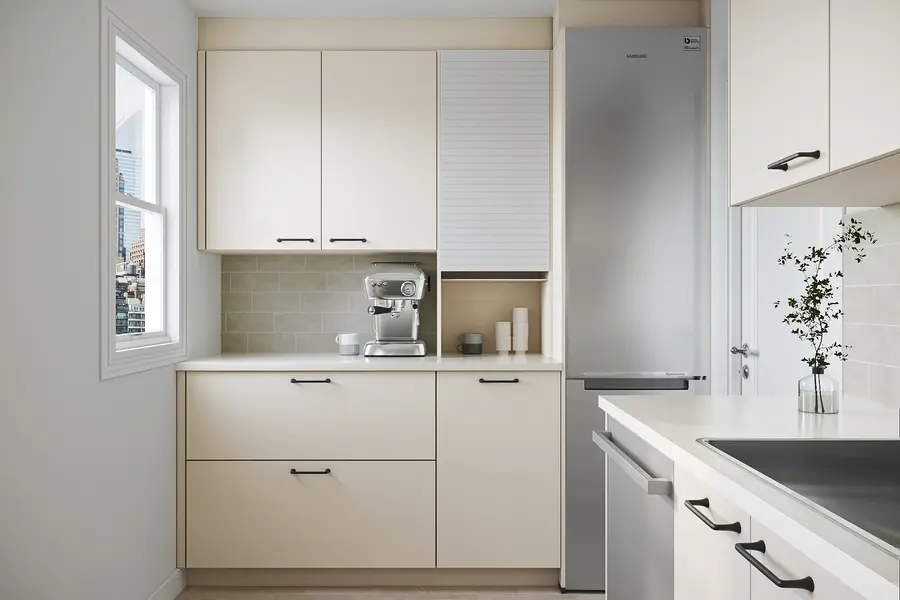
Storage planning followed the same philosophy. Rather than accepting difficult-to-access corner cabinets, the design incorporates a LeMans storage system that transforms otherwise awkward space into practical storage for pots, pans, and larger cookware. The appliance garage serves a similar purpose. Small appliances remain easily accessible for daily use while avoiding the countertop clutter that often makes smaller kitchens feel even smaller.
Taken together, these decisions demonstrate an important principle of small kitchen design. The goal is rarely to fit more into the room. The goal is to make the room work better.
How Material Selections Increased Cabinetry Costs
Although this kitchen is built on an entry-level German kitchen platform, several design decisions pushed the cabinetry investment beyond a purely budget-focused configuration. The homeowners selected lacquered laminate fronts rather than standard laminate cabinetry. While both materials offer durability and ease of maintenance, lacquered laminate provides a more refined appearance and elevated finish quality. This upgrade comes at a higher cost but contributes significantly to the overall aesthetic of the kitchen.
The floating shelves create another interesting tradeoff. Many homeowners assume open shelving is a cost-saving measure because there is less cabinetry involved. In reality, floating shelves often require additional fabrication, installation, finishing work, and wall reinforcement. While they help the kitchen feel visually lighter and more open, they are not necessarily the less expensive option.
The appliance garage represents a similar decision. It improves daily usability and reduces countertop clutter, but it also introduces additional cabinetry complexity and hardware costs. None of these individual decisions dramatically increase the budget on their own. Together, however, they demonstrate how small upgrades can gradually move a kitchen beyond an entry-level investment range.
Smart Appliance Selection Scaled to the Space
The appliance package reflects a practical approach to balancing performance, functionality, and budget. Rather than selecting the most premium appliance brands available, the homeowners combined Miele, Bosch, and Faber products to create a package that delivers strong performance without pushing the project into a significantly higher investment category.
Just as importantly, the appliances were selected with the size of the kitchen in mind. In compact spaces, choosing appliances that are appropriately scaled to the room often creates more value than simply choosing larger or more expensive models.
While the appliance package already reflects a relatively cost-conscious approach, additional savings would have been possible through the use of a freestanding range and refrigerator. However, doing so would have altered both the appearance and functionality of the kitchen. Like many decisions in kitchen design, the question is rarely whether a particular choice is more or less expensive. The more important question is whether the value it provides justifies the additional investment.
Kitchen Cost BreakdownThe following kitchen renovation cost breakdown reflects the exact kitchen configuration shown in this Upper West Side home: Semi-Custom German Cabinetry (Entry-Level Materials): $20,000–$25,000 Appliances: $11,265 Countertops: $6,800 Fixtures: $3,295
Estimated Total Kitchen Package (As Displayed):$41,360–$46,360 Construction Costs: Typically, 40–60% of the total renovation cost and not included in total costs) These costs reflect the kitchen as displayed and are provided for general guidance. Final pricing will vary based on layout, selections, and project conditions. For full specifications and detailed breakdown, view the complete kitchen display. See the Exact Kitchen Configuration Behind These CostsThis article explains the planning strategy behind this kitchen. The full kitchen display shows the exact cabinetry, appliances, materials, and configuration used for this project. If this kitchen feels close to what you are considering, you can also request a tailored quote for your own space directly from the kitchen display page. Explore more kitchens, cost ranges |
What Increased the Cost in This Kitchen
Several design decisions increased the investment level of this kitchen:
Lacquered laminate cabinet fronts
Appliance garage
LeMans corner storage system
Floating shelves
Miele appliance package
While the cabinetry platform itself sits within the entry-level category, these upgrades move the kitchen beyond a basic builder-grade configuration.
The appliance garage is a good example. In a small kitchen, countertop space is often limited, so creating a dedicated place for frequently used appliances helps keep the room feeling organized. The tradeoff is additional cabinetry, hardware, and manufacturing costs.
The LeMans corner storage system follows a similar logic. Rather than allowing the corner cabinet to become difficult-to-access storage, the mechanism makes the entire space usable for pots and pans. It improves functionality, but it is considerably more expensive than standard shelving.
The floating shelves help the kitchen feel lighter and less enclosed, particularly in a smaller room. While many homeowners assume open shelving is a budget solution, custom floating shelves often require additional fabrication and installation work.
The cabinetry itself uses lacquered laminate fronts rather than standard laminate, creating a more refined appearance while increasing costs. The Miele appliance package also sits above what would typically be selected for a purely budget-driven kitchen.
What Could Reduce the Cost
Several modifications could reduce costs while maintaining the overall layout and functionality of the kitchen:
Replace lacquered laminate with standard laminate fronts
Eliminate the appliance garage
Remove floating shelves
Replace the LeMans corner unit with shelving
Select a standard freestanding gas range
Use a more entry-level appliance package
The largest savings opportunities would come from simplifying material selections and specialty storage features. Standard laminate fronts would provide a similar level of durability while reducing cabinetry costs. Likewise, replacing the LeMans corner unit with standard shelving and eliminating the appliance garage would lower both hardware and manufacturing costs.
The floating shelves could also be replaced with a standard upper cabinet, depending on whether maximizing storage or maintaining a lighter visual appearance is the higher priority.
On the appliance side, a more entry-level appliance package or standard freestanding appliances would further reduce the overall investment.
What's interesting about this kitchen is that most of the potential savings come from convenience features, finish upgrades, and appliance selections rather than the core design itself. The storage-focused layout, compact appliance strategy, and overall planning approach would remain largely unchanged.
Understanding This Kitchen in Relation to Your Own ProjectIf you are considering a similar kitchen, several factors can significantly influence final pricing:
Even kitchens with similar appearances can vary substantially in cost depending on these decisions. Curious What a Kitchen Like This Would Cost in Your Home?Explore the complete kitchen display, review the exact specifications, and request tailored cost insight based on your layout, storage needs, appliance preferences, and renovation goals. Wondering How Your Kitchen Compares?Explore other real NYC kitchens with different layouts, appliance packages, material selections, and investment levels to see what aligns with your space, goals, and budget. → Explore the Kitchen Discovery Room |
How This Kitchen Compares
This kitchen is built on an entry-level German kitchen platform paired with mid-tier material selections and carefully selected appliances. Compared to luxury European kitchen systems, the cabinetry manufacturer sits in a more accessible price category. However, the thoughtful use of upgraded materials, storage accessories, premium fixtures, and Miele appliances allows the kitchen to deliver a significantly higher perceived value than many builder-grade alternatives.
This project demonstrates that good kitchen design is not necessarily about increasing the budget. Often it is about allocating the budget strategically to the elements that most improve daily functionality.
NYC Reality: Ventilation Planning Matters More Than Most Homeowners Realize
Many New York City apartments cannot accommodate traditional exterior exhaust systems. As a result, recirculating ventilation systems are often required. When planning ceiling-height cabinetry, soffits, or decorative scribes, it is important to understand where recirculated air will be discharged back into the room. Poor planning can restrict airflow and reduce the effectiveness of the ventilation system.
This becomes particularly important in smaller kitchens where air movement is already more limited. Before extending cabinetry to the ceiling or enclosing ventilation areas, homeowners should carefully evaluate how the hood system will function within the space. Like many kitchen decisions, the best solution balances aesthetics, functionality, building constraints, and long-term performance rather than focusing on appearance alone.
Explore Similar NYC Kitchens & Find What Fits Your Budget & Design Vision
If this kitchen is close to what you are considering, take the opportunity to explore other real NYC kitchens to find a direction that aligns with your space, budget, and design goals.
Kitchens that look similar can vary significantly in cost depending on how they are specified. Reviewing different layouts, cabinetry approaches, and appliance configurations helps you see how these decisions shape both the outcome and the investment.
Inside the Kitchen Discovery Room, you can explore real NYC kitchen setups with full cost breakdowns, allowing you to identify which combinations of layout, materials, and appliances match what you are looking for.
Once you find a direction that fits, you can request a tailored quote based on your layout and preferences.
What to Do Next
If this kitchen gives you a sense of what a project like this can cost, the next step is understanding how these decisions translate to your own space. From here, you can continue in different ways:
Explore more kitchens, cost ranges
Inside the Kitchen Discovery Room, you can explore different layouts, cabinet systems, and appliance setups with real cost ranges to understand what aligns with your space and budget.
Define a layout for your own apartment
Create a clear plan before engaging showrooms or contractors
Coordinate the kitchen scope from the start
Align layout, appliances, and execution to avoid fragmented decisions
Each path supports a different level of involvement.

Author & Designer (Written by Sabrina Antony, founder and lead designer of Kitchen Design NYC & Atelier bauherr.)
Sabrina Antony is an independent kitchen designer based in New York City, specializing in residential kitchen spaces for custom homes and high-end renovations throughout Manhattan, the Hamptons, and Greenwich. Her expertise includes custom kitchen millwork, European kitchen systems, kitchen planning, material direction, technical coordination, and renovation clarity. With nearly 20 years of international design experience, Sabrina creates kitchens that feel personal, highly functional, and architecturally connected to the home.
Each project begins with understanding how people truly live. From early design direction to construction coordination, Sabrina guides homeowners, architects, designers, and contractors through the decisions that shape the kitchen’s function, cost, atmosphere, and long-term outcome.
Her goal is always the same: to help clients make clearer decisions, protect their investment, and create kitchens that feel personal, functional, and lasting.


